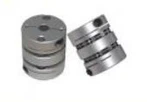
Types, characteristics and applications of splines worth collecting
Splines can be divided into angular splines and involute splines according to the shape of the spline teeth. Angle splines can be divided into rectangular splines and triangular splines. From the current application point of view, involute splines are the most common, followed by rectangular splines, and triangular splines are mostly used for loading and unloading tools.
Rectangular spline
The machining is convenient and the grinding precision is high. However, the spline broach is generally used for the internal spline, and the spline without a through hole cannot be processed. It can only be processed by grooving, and the precision is low. The relevant standards of China, Japan and Germany are as follows: China GB1144-87: Japan JIS B1601-85: Germany SN742 (German SMS factory standard): American WEAN company six-slot rectangular spline standard.
Involute spline
The tooth profile is involute, and there is a radial component of force on the gear teeth when loaded, which can play a self-centering function, so that each tooth has a uniform load, high strength and long life. The processing technology is the same as that of gears, the cutting tools are more economical, and it is easy to obtain higher precision and interchangeability. It is used for connections with larger loads, higher centering accuracy requirements, and larger dimensions. Widely used, the main standards at home and abroad are as follows: China GB/T3478.1-1999 (instead of GB3478.1-83), equivalent ISO4156-1981: Japan JIS B1602-1992, JIS D2001-1977: Germany DIN5480, DIN5482: American AN -SIB92.1a.
Triangle spline
The tooth profile of the internal spline is triangular, and the tooth profile of the external spline is an involute with a pressure angle of 45°. It is easy to process, with small and large teeth, which is convenient for the adjustment and assembly of the mechanism. For shafts and hubs: weakening is minimal. It is mostly used for static connection of light load and small diameter, especially for the connection of shafts and thin-walled parts. The main standards are: Japan JIS B1602-1991: Germany DIN5481.
The above are some of my sharing, I hope to help you, if you have other questions or cooperation intentions, you can contact us, we look forward to working with you. >>click here