
Are there any types of gear drives that you don’t understand?
Gear is a common part often used in mechanical transmission. The gear is made of high-quality and high-strength alloy steel, and the surface is carburized and hardened. It has strong load-bearing capacity and is durable.
In practical applications, helical gears are widely used in high-speed and heavy-duty situations due to their stable transmission, low impact, vibration and noise.
Spur gear is a classic gear type. The toothed part is parallel to the central axis, and the toothed concave part is not upright (slightly curved). This design can reduce the speed and torque gap between the gears when the gears are meshed with each other, and increase the utilization of power.
Bevel gears and bevel gears are also called bevel gears, bevel gears. Used for transmission between intersecting shafts. Compared with cylindrical gears, it can change the transmission direction. The single-stage transmission ratio can reach 6 and the maximum can reach 8. The design, manufacture and installation of spur and helical bevel gears are relatively simple, but they are noisy, and are used for low-speed transmission (<5m/s); the transmission power of spur bevel gears can reach 370 kilowatts, and the peripheral speed is 5 m/s. . The transmission of helical bevel gears runs smoothly, and the load-bearing capacity of the gears is high, but it is difficult to manufacture and has fewer applications.
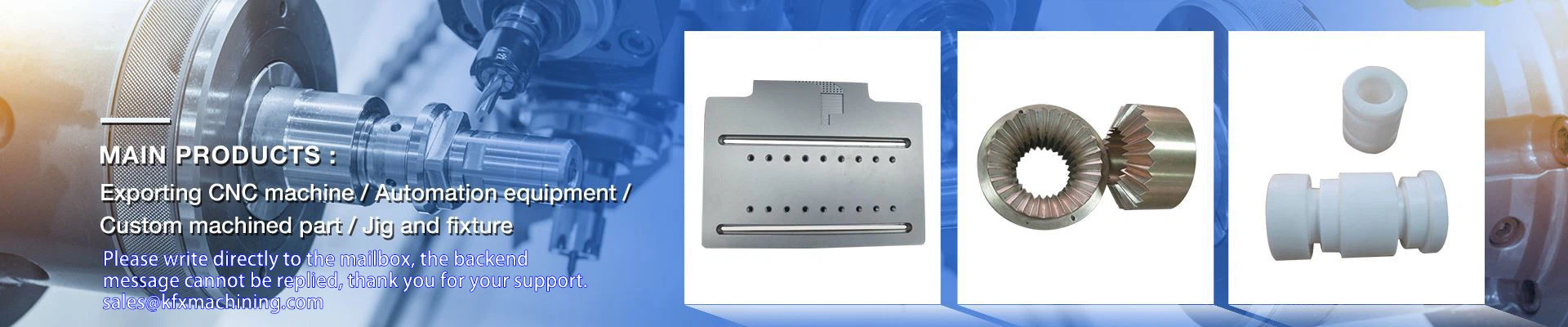
Spiral bevel gears Spiral bevel gears are spiral bevel gears, which are often used for movement and power transmission between two intersecting shafts. The teeth of the bevel gear are distributed on the surface of a cone, and the tooth profile gradually decreases from the large end to the small end. The tooth profile of spiral bevel gears is arc-shaped, and they are generally cone-shaped, like an umbrella shape, hence the name spiral bevel gears. Spiral bevel gears have high transmission efficiency, stable transmission ratio, large arc overlap coefficient, high carrying capacity, stable and smooth transmission, reliable operation, compact structure, energy saving and material saving, space saving, wear resistance, long life and low noise.
The herringbone gear helical gear has a lateral force on the shaft. In order to eliminate this force, a gear is made into a helical gear with opposite symmetry to eliminate this force. It looks like a personal character and is called a double helical gear for short. ). Herringbone gears have the advantages of high coincidence, small axial load, high carrying capacity and stable operation.
Worm and worm gear mechanisms are commonly used to transmit the motion and power between two interleaved shafts. The worm wheel and the worm are equivalent to the gear and the rack in the middle plane, and the worm and the screw are similar in shape. If you want to get a larger gear reduction ratio, you need to use a worm gear. The gear reduction ratio of worm gears is generally 20:1, and sometimes even as high as 300:1 or greater.
The above are some of my sharing, I hope to help you, if you have other questions or cooperation intentions, you can contact us, we look forward to working with you. >>click here


