
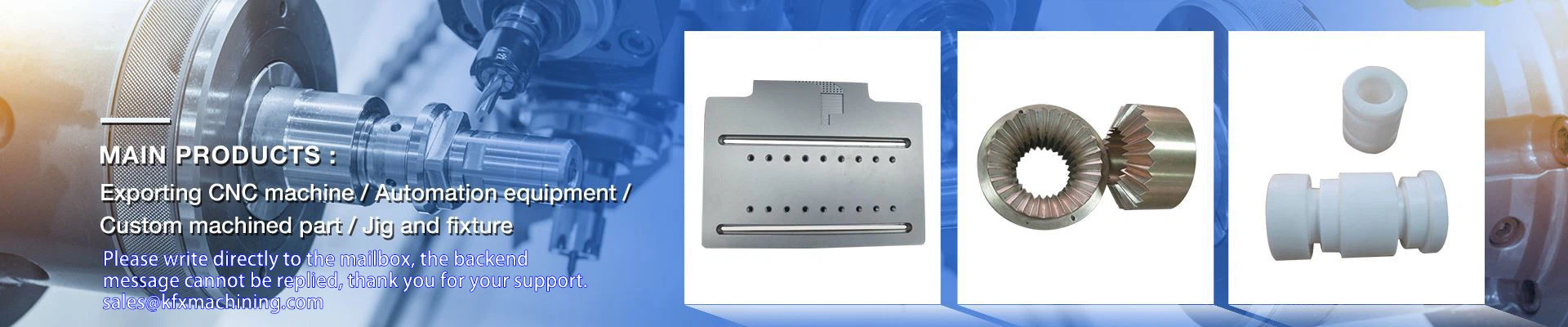
The use of Computer Numerical Control (CNC) machining technology has revolutionized the manufacturing process in various industries, including aerospace and aviation. The aerospace and aviation industries require high precision and accuracy in the production of various components and parts. CNC machining technology has proven to be a game-changer in achieving these requirements.

KFX-CNC machining has significantly impacted the aerospace and aviation sectors in various ways, providing numerous benefits that have improved efficiency, accuracy, and quality. First and foremost, CNC machining allows for the production of extremely complex parts with high precision. This is critical in the production of aircraft and spacecraft components, where accuracy is paramount. The use of CNC machining ensures that parts are produced with consistent quality, eliminating the possibility of human error, which can be costly and dangerous.
Another benefit of CNC machining in the aerospace and aviation industry is its ability to produce parts with a tight tolerance range. This high level of accuracy is essential in the production of parts that must fit perfectly to ensure optimal performance. CNC machines also produce parts faster than traditional machines, which increases productivity and reduces lead time. Additionally, CNC machines can work with a wide range of materials, including aluminum, titanium, stainless steel, and other exotic alloys, which are essential for aerospace and aviation applications.

CNC machining also reduces the need for manual labor, which leads to higher efficiency and cost savings. Automated processes reduce production delays, allowing for on-time delivery and faster project completion times. CNC machining technology also supports the production of customized parts and prototypes, reducing the time and cost of developing new components.
In conclusion, CNC machining technology has changed the game for the aerospace and aviation industry, providing numerous benefits that have improved the efficiency, accuracy, and quality of parts production. This technology has expanded the range of materials that can be used in component production, greatly increasing the complexity of designs that can be achieved. With CNC machining in place, the aerospace and aviation industries can continue to innovate and develop cutting-edge technology, taking humanity to new heights and beyond.


